 My Capital Evolution co-author, Elizabeth MacBride
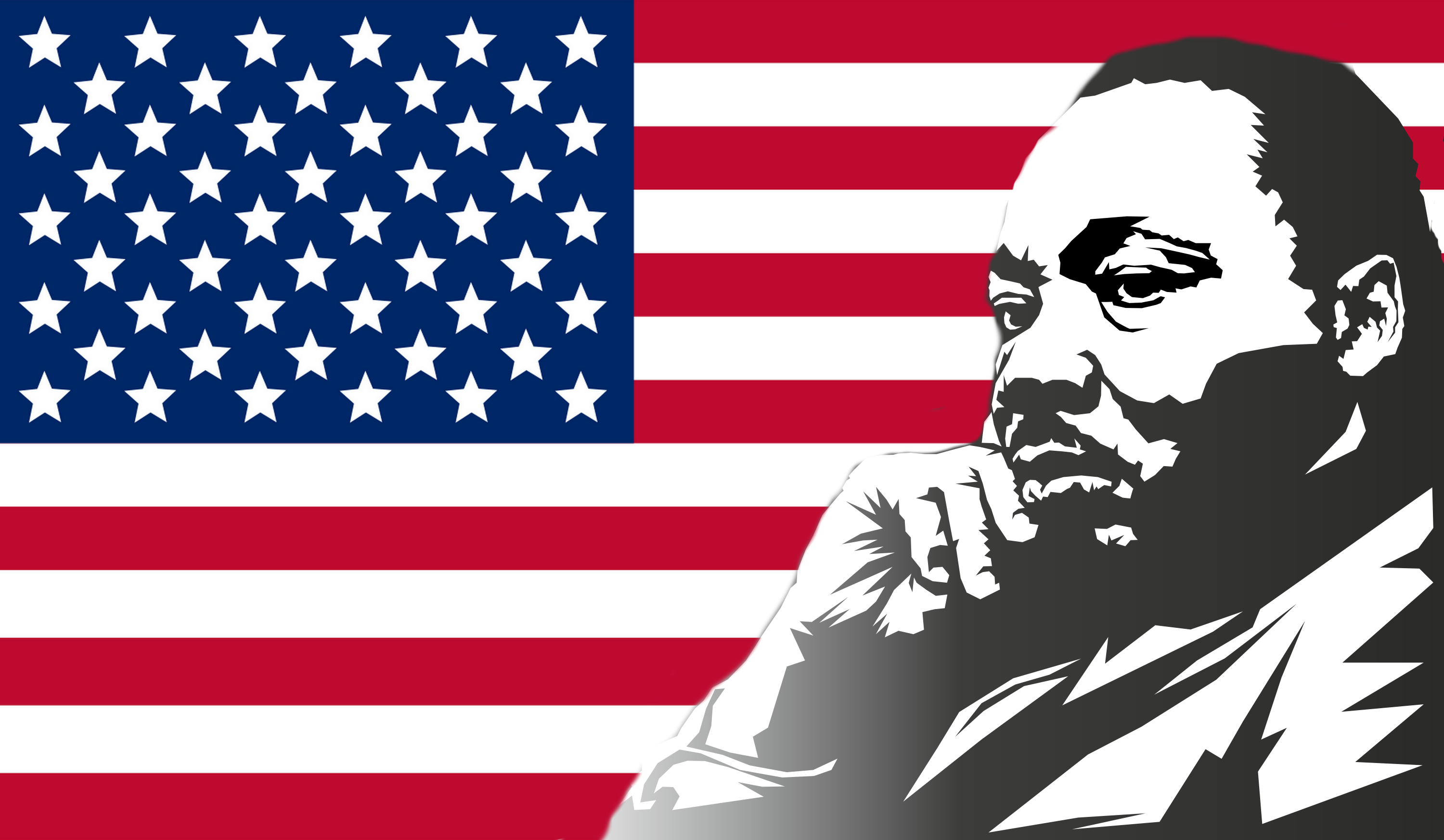
, and I have been reflecting this past week on the words of Dr. Martin Luther King and how they continue to resonate deeply as we face both economic and social challenges. We’re committed to broadening the call to use the tools of Evolved Capitalism that give all Americans, and importantly, the companies they work for, the opportunity to thrive. Below is a piece we wrote in honor of Dr. King’s birthday.
My Capital Evolution co-author, Elizabeth MacBride
, and I have been reflecting this past week on the words of Dr. Martin Luther King and how they continue to resonate deeply as we face both economic and social challenges. We’re committed to broadening the call to use the tools of Evolved Capitalism that give all Americans, and importantly, the companies they work for, the opportunity to thrive. Below is a piece we wrote in honor of Dr. King’s birthday.
“When machines and computers, profit motives and property rights are considered more important than people.”
“A true revolution of values will soon look uneasily on the glaring contrast of poverty and wealth. With righteous indignation, it will look across the seas and see individual capitalists of the West investing huge sums of money in Asia, Africa, and South America, only to take the profits out with no concern for the social betterment of the countries, and say: ‘This is not just.’”
These words are not Bernie Sanders on the campaign trail demanding universal healthcare. Nor were they spoken by Marjorie Taylor Greene, arguing for President Trump to focus less on foreign wars. They were not heard from New York City’s mayor, Zohran Mamdani, making the case for affordability.
They are the words of Dr. Martin Luther King Jr., shared nearly 60 years ago.
The bipartisan frustration with capitalism is not new. In the final years of his life, Dr. King advocated for an “economic bill of rights” designed to address the root causes of poverty by guaranteeing a meaningful job and wage for everyone. King wanted systemic change, not one-off government programs that addressed things like homelessness, mental healthcare, or food assistance. We’re in the midst of an era like Dr. King’s, in which divisiveness threatens to overcome optimism and progress.
Congress is not the answer– interesting proposals like a Universal Basic Income, which were once supported by staunch conservatives like Milton Friedman and progressives like Dr. King, seem out of reach in today’s politics. Worst of all, the Trump administration shows us government programs can be cut after every election, with a stroke of the pen.
We need a new movement for an economic bill of rights – a new consensus that will drive America forward to a more just future. The change has to come – and already is beginning – in the business world. When we researched our book, Capital Evolution , we found a new movement toward broader ownership to restore economic security. Giving people equity in the economy they help create is the best way to secure their position in it.
We are living through a time when fundamental assumptions about our economy and role in the world are being called into question. The current version of capitalism that we practice has only widened the inequalities Dr. King identified. An emblematic tale for the past 50 years is General Electric, which was one of the first 12 companies to join the Dow Jones and a business that delivered tremendous value to society over the first part of the 20th century. When Jack Welch became the CEO in 1981, he was singularly focused on GE’s stock price. He fired over 250,000 people during his tenure, the bottom 10 percent of GE’s workforce annually, regardless of the performance of the business. GE saw historic gains in stock price, but its pursuit of short-term profits led it to adopt misleading and, at times, nefarious accounting practices. After struggling for many years, GE was removed from the Dow Jones in 2018, and few people can name a big innovation from the company since. Shareholders got rich; our society suffered.
In the 1960’s a child born into the bottom quarter of wealth had roughly a one-in-four chance of reaching the top quarter by adulthood. Today, that chance has collapsed to one in twenty. The average first-time homebuyer is now 41 years old. Young Americans can’t afford to purchase a home or pay off their college debt.
Wealth concentration mirrors the late 1920s. The wealthiest 10 percent of Americans own 92.5 percent of all stocks. About two-fifths of Americans don’t own any stock. Meanwhile, CEO compensation has soared 900 percent over fifty years, while worker pay rose just 12 percent. It is no wonder the share of Americans with a positive view of capitalism has declined eight points to 57 percent in just five years.
The good news is business leaders are starting to evolve. For example, former PayPal CEO Dan Schulman surveyed his 23,000 employees in 2019 and discovered something alarming: a customer service representative in Omaha was selling his blood plasma twice a month to make ends meet. On paper, PayPal was paying at or above market rates. Schulman realized that benchmarking against competitors didn’t mean his workers were okay. He raised wages, switched to weekly pay, and boosted healthcare contributions. The company continues to thrive and Schulman got the equivalent of a promotion in the world of CEOs: he was recently named to lead Verizon.
Private Equity firm KKR co-head Pete Stavros grew up watching his father operate a road grader in Chicago for forty years. His father complained about misaligned incentives: work too fast and your hours go down, your paycheck goes down. Today, Stavros has made employee ownership central to KKR’s strategy. Line workers receive multiples of their annual salary when companies are sold. At Optimax, founded by two former Kodak line workers, employees receive 25 percent of monthly profits.
Businesses have a clear choice: cling to an outdated, extractive form of capitalism that fuels inequality, or embrace a model of shared prosperity by expanding ownership. They can eliminate workers with machines, or give them some stock, employee ownership trusts, and equity participation. The rest of us have a choice too: consumers should continue to choose companies that share prosperity with workers and communities; educators must choose to teach the next generation on the value of ownership, and investors must demand their portfolio companies create more owners.
Dr. King wrote that Black Americans “expect their freedom, not as subjects of benevolence but as Americans who were at Bunker Hill, who toiled to clear the forests, drain the swamps, build the roads, who fought the wars and dreamed the dreams the founders of the nation considered to be an American birthright.” Ownership will deliver equality, and we must demand it.